Is LinkedIn Still a Professional Platform—or Just Facebook in a Suit?
Sandro Quaranta
Enterprise & Elite-Sport Performance Management ◆ Owner Dutch Disruption, Palazzo Music ◆ IT Strategy & Management Consultant
January 6, 2026
Having not visited LinkedIn for a while, I recently logged back in out of curiosity. What I noticed surprised me. Instead of professional insights, industry discussions, or thoughtful reflections on work, my feed was filled with emotional, poorly informed political statements, personal confessions, and posts framed as moral lessons rather than professional perspectives.
This is exactly why I’m not active on the “advertising-flyer Facebook” either.
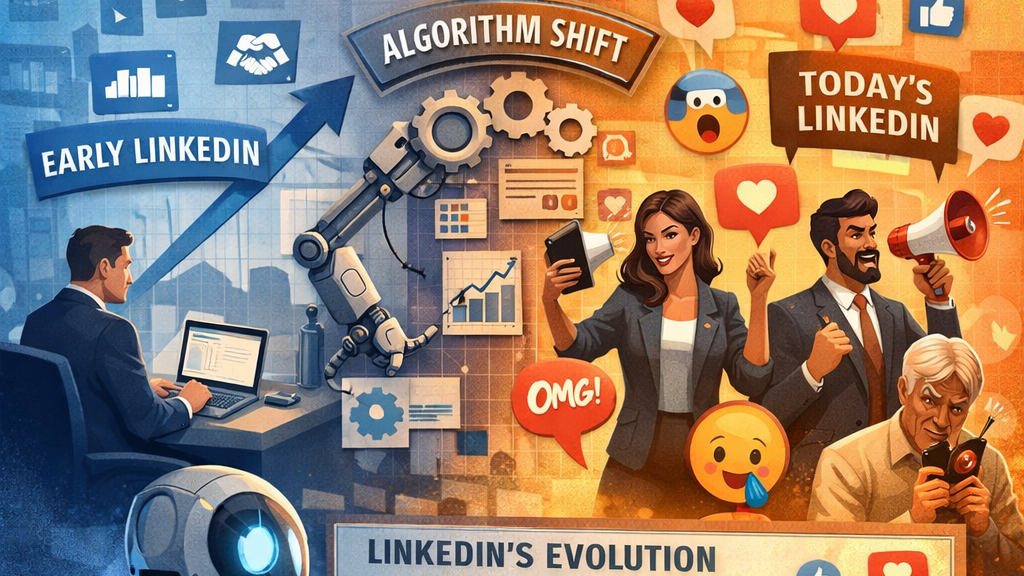
What feels different now is the balance. Content that provokes agreement or outrage seems to outperform posts that aim to inform or deepen understanding. This shift doesn’t appear accidental. Like most platforms, LinkedIn is driven by engagement. Emotional content generates comments. Comments increase reach. Reach keeps users scrolling. From an algorithmic perspective, this makes sense—but it raises a legitimate question about what LinkedIn is optimizing for.
If engagement outweighs expertise, what happens to the original purpose of a professional network?
A Historical Perspective on LinkedIn’s Evolution
Over the years, LinkedIn’s content and user behavior have evolved in distinct phases:
2003–2007: Purely Professional
In its early years, LinkedIn was focused almost exclusively on professional networking. Posts were primarily job-related updates, career achievements, industry news, and networking requests. Engagement was polite and limited—likes and brief comments—but the emphasis was on professional relevance rather than personal expression.
2007–2012: Early Algorithmic Changes and Social Features
As LinkedIn introduced features like the feed, recommendations, and profile endorsements, content began to shift subtly. Users started sharing more personal achievements and reflections, and the platform encouraged “social interaction” alongside networking. Algorithms began factoring in user engagement, though professional relevance still largely dictated what was visible.
2013–2015: Rise of Thought Leadership and Storytelling
LinkedIn increasingly promoted long-form posts, encouraging users to publish articles. Thought leadership became a major trend: professionals shared insights, lessons learned, and industry perspectives. Personal storytelling emerged, but it was usually framed in a professional context—vulnerability and emotion were acceptable if tied to work experience.
2016–2020: Engagement Optimization and Personal Branding
The platform’s algorithm shifted more aggressively toward engagement metrics. Posts that generated comments, likes, or shares—especially stories with emotional hooks or relatable experiences—were amplified. Users discovered that personal branding and authenticity performed better than traditional professional updates. Influencers and frequent posters emerged, shaping norms for visibility and interaction.
2020–Present: Hybrid Social-Professional Feed
The last few years have seen LinkedIn evolve into a hybrid platform. Emotional posts, personal stories, and even emotional, poorly informed political statements now appear alongside traditional professional content. The algorithm prioritizes engagement, often rewarding posts that provoke debate or strong reactions. The platform blends professional networking with social media dynamics, making it feel more like Facebook—though still dressed in business attire.
The Microsoft Factor and Business Model
Since Microsoft acquired LinkedIn in 2016, the platform has also had to align with Microsoft’s broader business strategy. LinkedIn is no longer just a networking site; it’s a revenue-generating platform. It earns through premium subscriptions, advertising, recruitment solutions, and learning services.
To maximize engagement and ad revenue, LinkedIn increasingly follows trends popular on other social networks: personal storytelling, emotional posts, and content that sparks interaction. These algorithmic incentives ensure it stays competitive in the attention economy—but also accelerate the blending of professional insight with social-media-style content.
The Future: AI Content Overload?
Looking ahead, one question looms: will LinkedIn feeds soon be bombarded with AI-generated content optimized purely to drive engagement rather than convey expertise?
The platform may face the same challenges as other social media sites—balancing authenticity, professional value, and algorithmic incentives in a world of automated content.
A Vision for Professionals
Amid these changes, one thing is clear: LinkedIn will reflect what we, as users, value. Professionals who focus on real expertise, thoughtful insights, and meaningful dialogue will stand out. In a feed dominated by emotion and algorithmic rewards, authenticity becomes a differentiator.
In general, LinkedIn’s algorithm favors consistency in topics and post style—so it knows which audience to show your content to. It rewards meaningful engagement, not endless scrolling or swiping.
The rise of AI-generated content is a perfect example: posts optimized purely for clicks and reactions can dominate feeds, even if they lack real insight. If you want to be heard tomorrow, focus on value today. Share lessons, challenge assumptions respectfully, and remember that a professional network is more than just attention—it’s a platform to connect, learn, and grow.
Post Title
Main feed item content.
Post Title
Another feed item.
Post Title
More content in the feed.